
Stewardship’s Value on GRI
Rated 0 out of 5
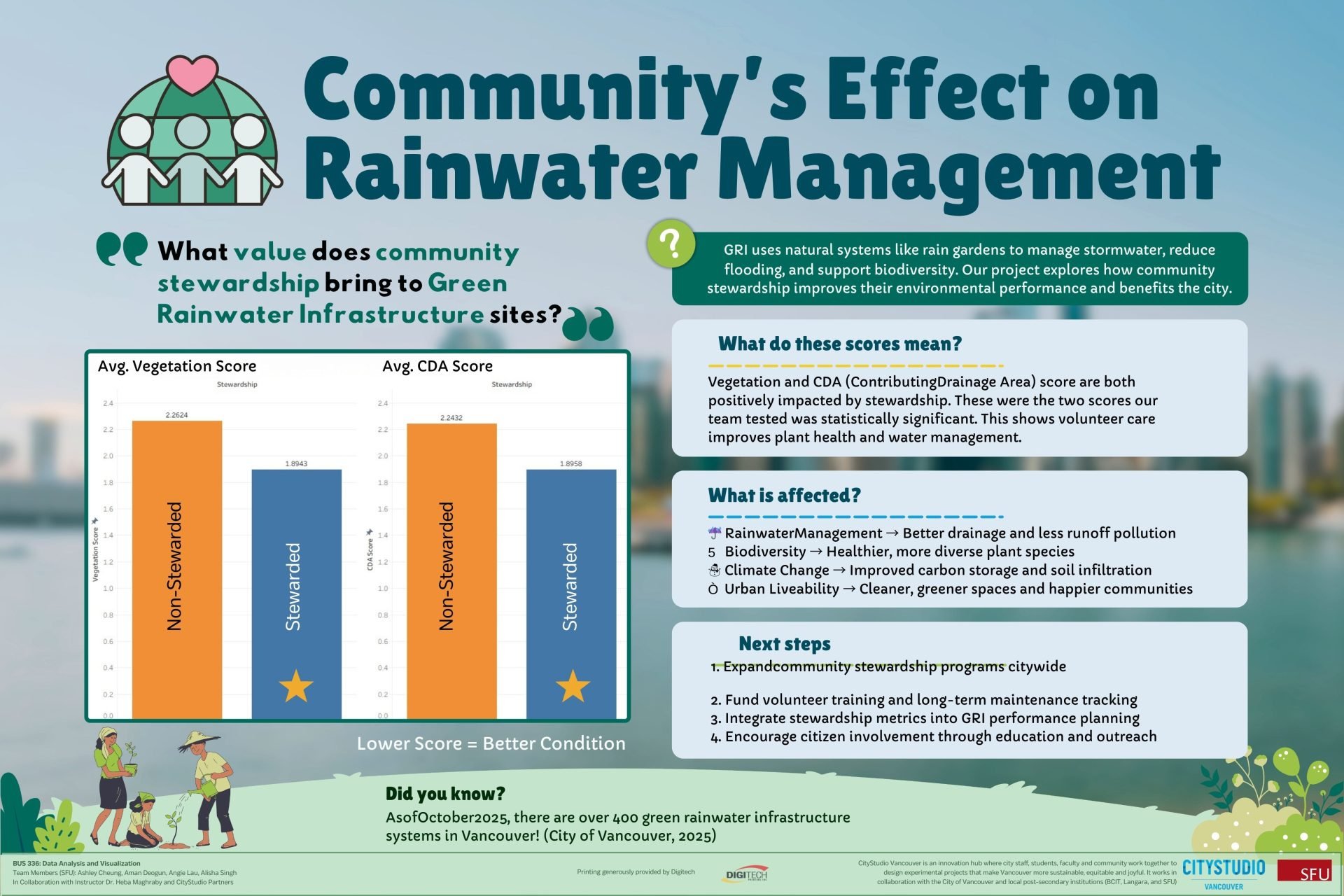
Community stewardship significantly improves the performance of Vancouver’s GRI sites. Using condition assessments and maintenance data, the analysis showed statistically better vegetation and contributing drainage area scores at stewarded sites. These improvements enhance rainwater management, biodiversity, climate adaptation, and urban liveability. Findings confirm that volunteer-led care creates measurable environmental benefits and should be expanded and better integrated into city planning.
School:
SFU
Department:
Business Administration
Course:
Data Analytics and Visualization (BUS 336)
Instructors:
- Heba Maghraby
City of Vancouver:
- Julie McManus
Student Team:
- Ashley Cheung
- Aman Deogun
- Angie Lau
- Alisha Singh
Term:
Fall 2025
Summary
This study explored the research question: “What measurable value does community stewardship bring to the performance of GRI sites in Vancouver?” Using the City of Vancouver’s 2024 Bioretention Condition Assessment, contractor maintenance checklists, and various city strategy reports, the analysis compared stewarded and non-stewarded green rainwater infrastructure (GRI) sites. The primary dataset used a 1–5 scoring scale, where lower scores reflected better site conditions, enabling clear comparisons.
Initial visualization showed only minor differences between the groups, prompting statistical testing to determine whether these differences were meaningful. Using the Wilcoxon Rank Sum Test, the study found two statistically significant improvements at stewarded sites: Vegetation Score and Contributing Drainage Area (CDA) Score (p < 0.05). On average, stewarded sites had lower, and therefore better, vegetation and CDA scores, indicating healthier plant communities and more effective rainwater capture.
These findings translate into broader environmental benefits. Improved CDA performance supports better rainwater management by reducing surface runoff bypass, decreasing localized flooding, and preventing polluted water from entering natural waterways. Vegetation improvements contribute to biodiversity through healthier, more diverse plant life and better invasive-species management. Together, the enhanced vegetation and hydrological function support climate resilience by increasing carbon storage, improving soil health, reducing heat island effects, and mitigating stormwater impacts.
Beyond environmental metrics, stewardship also strengthens urban liveability by increasing community engagement, improving local green spaces, and supporting resident well-being. Evidence from city reports shows that stewarded sites demonstrate superior infiltration, reduced flooding, and stronger ecological function.
Overall, the study concludes that community stewardship measurably enhances GRI performance. The group recommends expanding stewardship programs, increasing training and monitoring resources, and incorporating stewardship metrics into long-term maintenance planning to sustain and build on these benefits.
NEXT STEPS
Following the completion of our analysis, we have shared our findings with our City of Vancouver staff partner to support ongoing conversations about the measurable value of community stewardship. Our next steps focus on translating these insights into actionable improvements within the city’s GRI management approach. Given the clear evidence that stewardship enhances vegetation health, rainwater capture, biodiversity, and overall system performance, we hope to see these results acknowledged through increased municipal funding dedicated to stewardship initiatives. Strengthening financial support would allow for more consistent training, monitoring, and long-term site care.
Additionally, we recommend expanding stewardship programs to more GRI sites across Vancouver. Scaling these efforts will not only enhance environmental performance but also deepen community involvement and improve neighbourhood resilience. By integrating stewardship outcomes into future planning and maintenance schedules, the city can ensure these benefits are systematically recognized and sustained. Overall, our project aims to inform policy decisions that elevate stewardship as a core component of Vancouver’s green infrastructure strategy.
{{ reviewsTotal }}{{ options.labels.singularReviewCountLabel }}
{{ reviewsTotal }}{{ options.labels.pluralReviewCountLabel }}
{{ options.labels.noReviewsLabel }}
{{ options.labels.newReviewButton }}
{{ userData.canReview.message }}Related projects
Rated 0 out of 5
This project evaluated VanDusen Botanical Garden's facility rental processes, assessed purpose-built booking software...
Rated 0 out of 5
An app that helps food-insecure people find affordable and nutritious food distributors like...